AI Overview
Great packing is methodical, room by room, with the right materials. Heavy items go in small boxes, fragiles get paper and padding, and every box is labelled by room and contents. Packing the rooms you use least first, and the kitchen and bedrooms last, keeps daily life running until moving day.
Key highlights
- Pack one room at a time so it never feels overwhelming
- Heavy items in small boxes, light items in large boxes
- Wrap fragiles individually and fill every gap so nothing shifts
- Label each box with its room and a few contents
- Keep screws and cables in labelled bags taped to their furniture
- Pack an essentials box for the first night and load it last
Packing is the part of moving people most underestimate. Done well it protects your belongings and makes unpacking a breeze, done badly it means breakages and boxes you cannot find anything in.
The trick is to work methodically, one room at a time, with the right materials. You do not need to be an expert, just organised.
Here is how to pack each room of your home like a professional.
Get your materials right
Good packing starts with good materials. Skimping here is a false economy that ends in damaged goods.
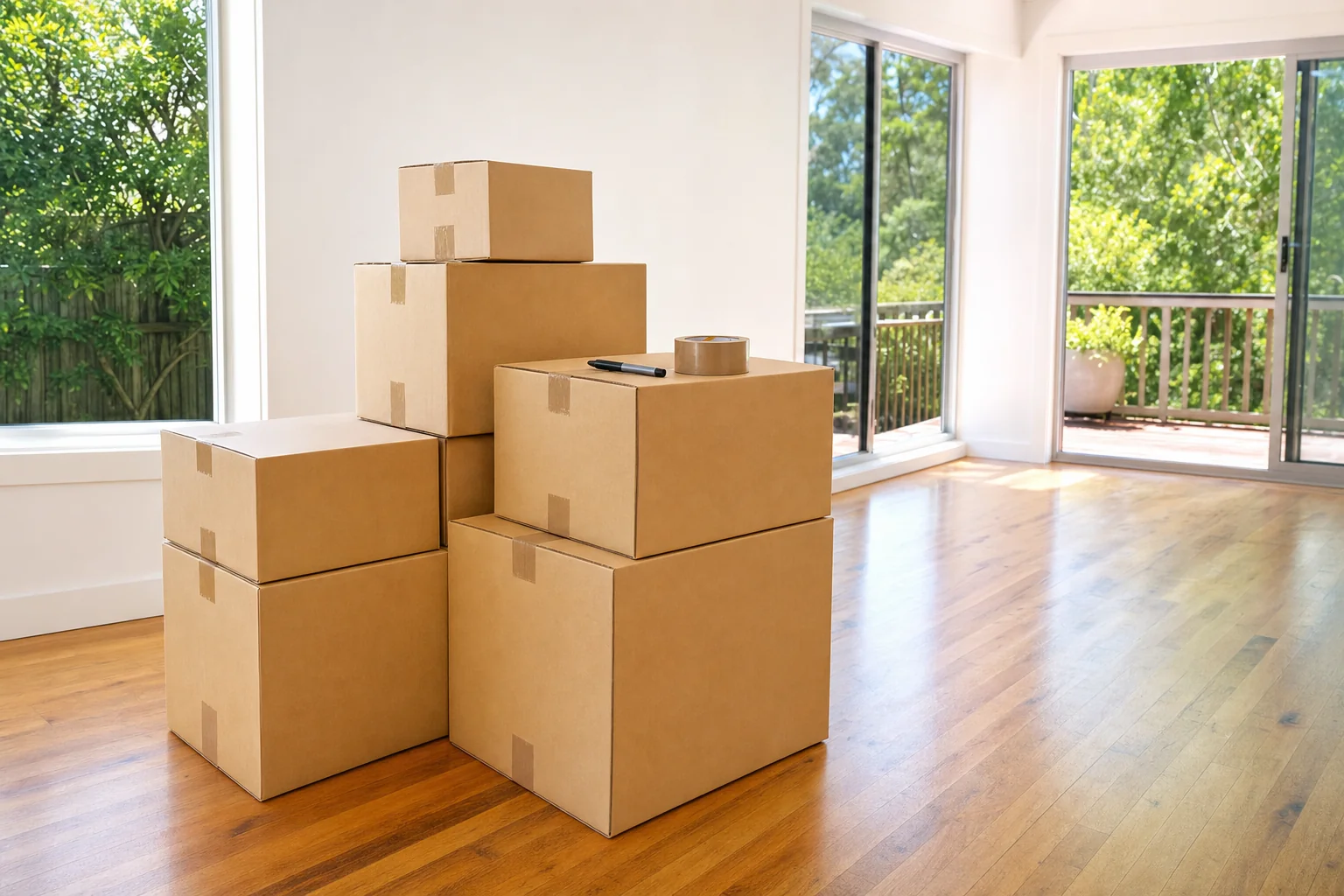
- Sturdy cartons in a couple of sizes, not random supermarket boxes
- Butchers paper and bubble wrap for fragiles
- Strong packing tape and a dispenser
- Permanent markers for labelling
- Resealable bags for screws, cables and small parts
Heavy in small, light in large
Books and crockery go in small boxes so they stay liftable. Bedding and pillows fill large boxes without making them heavy. It sounds obvious, but it is the mistake almost everyone makes.
The kitchen and fragiles
The kitchen is the most time-consuming room to pack because so much of it is fragile. Give it the time it deserves.
Wrap individually
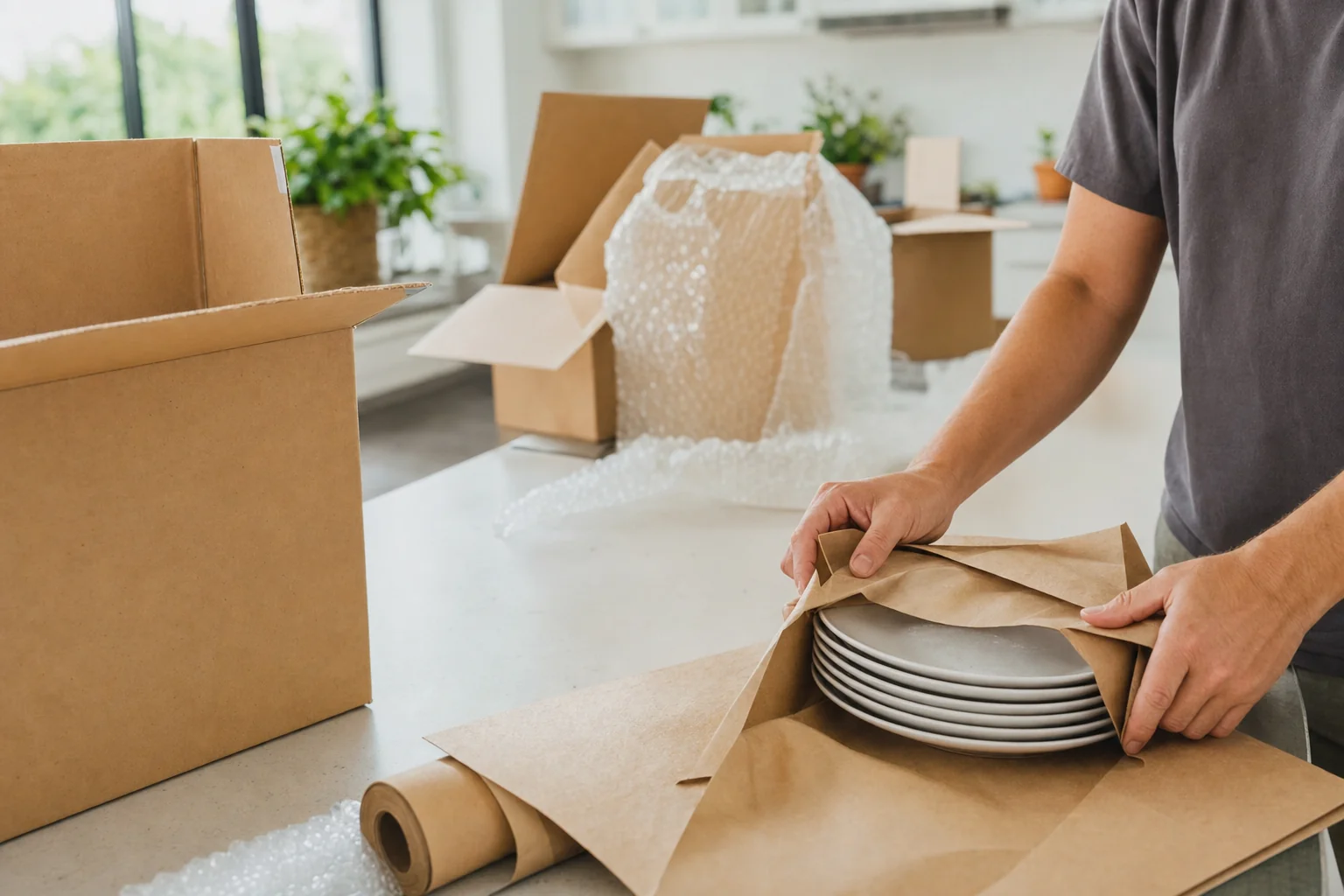
Each plate, glass and bowl gets its own wrap of paper, never stacked bare.
Stand plates on edge
Plates packed vertically, like records, survive far better than flat stacks.
Fill the gaps
Pad every void with paper so nothing can shift or rattle in transit.
Mark it fragile
Label fragile boxes clearly on the top and sides so they are handled with care.
Small
boxes for heavy crockery and tins
Vertical
is the safe way to pack plates
Zero
empty gaps left in a fragile box
Bedrooms, bathroom and the rest
The living rooms and bedrooms pack quickly once the fragiles are done. The key is keeping things together so unpacking is logical.
Quick wins for the remaining rooms
- Keep clothes on their hangers in wardrobe boxes or tied bundles
- Tape screws and fittings in a bag to the furniture they belong to
- Photograph cable setups before unplugging electronics
- Use towels and linen as padding around fragile items
- Pack a separate bathroom essentials bag you can grab first
Prefer to skip it entirely?
Our team can pack your whole home, or just the kitchen and fragiles, with quality materials. Ask about packing when you request your quote on (02) 9072 1190.
Label every box by room. Your future self, standing in a new home surrounded by cartons, will thank you.
Planning a move? See how we handle Packing & Unpacking across the Lower North Shore.
View serviceFrequently Asked Questions
It varies with your home size, but a rough guide is around 10 to 15 boxes per room, more for the kitchen and a book-heavy study. It is always better to have a few spare than to run short on packing day.
Wrap each plate in paper and pack them standing on their edges, like records in a crate, rather than stacked flat. Fill any gaps with paper so they cannot move, and always use a small, sturdy box.
Yes. We offer full and partial packing with quality materials, so you can hand over the whole job or just the fragile and awkward items. Many people have us pack the kitchen and pack the rest themselves.